
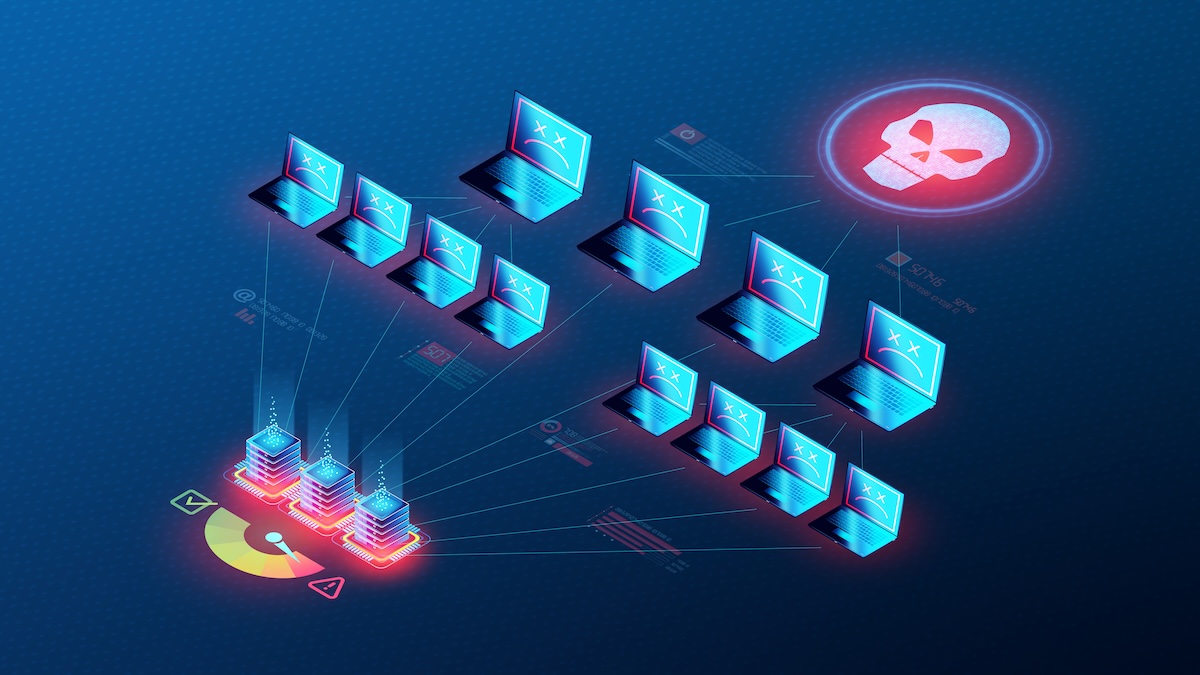
In a powerful testament to the escalating global fight against cybercrime, an international coalition of law enforcement agencies from 21 countries has successfully executed a coordinated action, dubbed ‘Operation PowerOff,’ targeting the nefarious ecosystem of Distributed Denial-of-Service (DDoS) for-hire services. This monumental effort led to the takedown of 53 illicit domains and the arrest of four key individuals, significantly crippling a pervasive threat to digital stability worldwide.
The operation, spearheaded by Europol, underscores a crucial shift in cybercrime enforcement: a unified, cross-border approach is paramount to dismantling sophisticated criminal networks that exploit the internet for malicious purposes. DDoS attacks, particularly those facilitated by easily accessible ‘booter’ services, have long posed a significant challenge, disrupting essential online services and causing immense financial and reputational damage.
Understanding DDoS-for-Hire Services: The Digital Wrecking Ball
Distributed Denial-of-Service (DDoS) attacks are malicious attempts to disrupt the normal traffic of a targeted server, service, or network by overwhelming it with a flood of internet traffic. Imagine thousands, or even millions, of cars trying to enter a single lane on a highway simultaneously – that’s essentially what a DDoS attack does to a server, making it unavailable to legitimate users.
DDoS-for-hire, often referred to as ‘booter’ or ‘stresser’ services, democratize this destructive capability. They are illicit online platforms that allow individuals, regardless of their technical proficiency, to launch DDoS attacks against targets for a fee. These services abstract away the technical complexities, providing user-friendly interfaces where one can simply input a target IP address or URL, select attack parameters, and pay, often using cryptocurrency, to initiate an attack. This accessibility lowers the bar for cybercrime, enabling a wider range of actors – from disgruntled individuals seeking revenge to professional cybercriminals aiming for extortion or disruption – to cause significant harm.
Motivations Behind DDoS Attacks
- Financial Gain: Extortion, demanding ransom payments to cease an attack.
- Competitive Advantage: Disrupting a rival’s online presence, especially during peak sales periods.
- Vandalism/Griefing: Pure mischief or to disrupt online gaming sessions.
- Ideological Reasons (Hacktivism): Protesting or disrupting services associated with a particular organization or government.
- State-Sponsored Attacks: Used as part of broader cyber warfare or intelligence operations.
Operation PowerOff: A Coordinated Global Strike Against Cybercrime
This latest phase of Operation PowerOff represents a formidable display of international collaboration. Authorities across 21 nations pooled resources, intelligence, and expertise to identify, track, and ultimately dismantle the infrastructure supporting 53 prominent DDoS-for-hire domains. The impact of this coordination is far-reaching, striking at the heart of cybercriminal operations.
Key Achievements and Statistics
Europol’s announcement highlighted the immediate, tangible results of this intensive effort:
- Domain Takedowns: 53 domains associated with DDoS-for-hire services were taken offline. These domains served as critical gateways for criminals to access and launch attacks.
- Arrests: Four individuals implicated in the operation of these services were arrested, signaling that those behind these illicit platforms will face justice.
- Warning Emails/Letters: Approximately 75,000 warning communications were sent to identified users of these services. This proactive measure aims to deter current users and educate potential new ones about the severe legal consequences of engaging in such activities.
- Search Warrants: 25 search warrants were executed, leading to the seizure of crucial infrastructure and digital evidence.
- Exposure of User Accounts: Over 3 million criminal user accounts associated with these services were exposed, providing invaluable intelligence for future investigations.
Participating Nations: A Global Front
The sheer scale of international cooperation is a hallmark of Operation PowerOff. The following countries actively participated, demonstrating a unified global stance against cybercrime:
| Region | Participating Countries |
|---|---|
| Oceania | Australia |
| Europe | Austria, Belgium, Bulgaria, Denmark, Estonia, Finland, Germany, Latvia, Lithuania, Luxembourg, Netherlands, Norway, Poland, Portugal, Sweden, United Kingdom |
| Americas | Brazil, United States |
| Asia | Japan, Thailand |
This diverse list highlights the universal threat posed by DDoS services and the global commitment to counter it.
The Anatomy of a Booter Service Takedown
The success of Operation PowerOff wasn’t a stroke of luck but the culmination of several ‘operational sprints.’ These sprints involved gathering experts from national authorities, sharing intelligence, and meticulously tracing the intricate infrastructure that underpins booter services.
Europol explains that the infrastructure of these services comprises a complex web of servers, databases, and other technical components. These are often distributed across various jurisdictions, hidden behind layers of proxies, and frequently leverage compromised devices (botnets) to launch attacks. The process of dismantling them involves:
- Intelligence Gathering: Identifying the domains, IP addresses, payment methods, and administrative interfaces of the booter services.
- Tracing Infrastructure: Unraveling the network of servers, command-and-control centers, and payment processors.
- Legal Coordination: Securing legal mandates and coordinating simultaneous actions across multiple countries to seize assets and make arrests.
- Technical Disruption: Taking down domains, seizing servers, and disrupting the flow of traffic to these services.
The seizure of infrastructure is critical not only for stopping current illegal activities but also for preventing future damage. It also provides investigators with valuable forensic data that can lead to the identification of more operators and users.
Transition to Prevention: A Proactive Stance
Operation PowerOff is not merely about reactive takedowns; it also incorporates a significant prevention phase. This forward-looking strategy aims to deter potential users and make it harder for new booter services to emerge and thrive.
Key Prevention Initiatives:
- Search Engine De-listing: Removal of 100 URLs promoting booter services from search engines. This makes it significantly harder for individuals to find and access these illicit platforms.
- Targeted Advertisements: Placement of ads designed to intercept individuals searching for DDoS-for-hire services. These ads will likely present warnings about the legal consequences and ethical implications.
- Blockchain Warnings: Placement of warnings on blockchains commonly used by cybercriminals. This aims to disrupt their payment mechanisms and raise awareness within their ecosystem about the risks involved.
These preventive measures are crucial for tackling the demand side of the problem, educating potential users about the severe repercussions of engaging in cybercrime.
A Decade of Disruption: Operation PowerOff’s Enduring Legacy
The recent takedowns are part of a broader, ongoing initiative that has been active for nearly a decade. Operation PowerOff has consistently targeted and disrupted dozens of prominent DDoS-for-hire services, demonstrating a long-term commitment to combating this form of cybercrime. Previous high-profile successes include the disruption of:
- Webstresser: Once the world’s largest marketplace for DDoS attacks.
- DigitalStress: Another major player in the illicit stresser market.
- Stresser.tech: A platform notorious for its ease of use and destructive capabilities.
- And many others that have contributed to the digital mayhem.
These sustained efforts highlight the persistent nature of cybercrime and the equally persistent dedication of international law enforcement to counter it. Each successful disruption sends a clear message to cybercriminals: their activities will be met with organized, global resistance.
The Evolving Threat Landscape: Beyond Simple Booters
While booter services represent a significant threat, the landscape of DDoS attacks is constantly evolving. Attackers are increasingly leveraging sophisticated botnets and novel attack vectors, making defense more challenging. Recent reports indicate the rise of new threats:
- Evasive Masjesu DDoS Botnet: Specifically targeting IoT devices, which are often less secure and thus easier to compromise, creating massive botnets.
- Aisuru and Kimwolf DDoS Botnets: Also recently disrupted in international operations, these botnets showcase the continuous arms race between attackers and defenders.
- SocksEscort Proxy Service Powered by AVrecon Botnet: Demonstrates how compromised devices can be repurposed for various illicit activities, including providing proxy services to mask attacker identities.
These examples underscore the need for constant vigilance, advanced threat intelligence, and continuous innovation in cybersecurity defense mechanisms.
Protecting Against DDoS Attacks: Best Practices for Organizations
For organizations, especially those operating critical online services, understanding and mitigating DDoS risks is paramount. One hour of downtime can cost an organization an entire annual security budget, emphasizing the importance of a robust defense strategy. Here are key best practices:
| Category | Recommended Best Practices |
|---|---|
| Preparation |
|
| Protection Services |
|
| Monitoring & Response |
|
| Post-Incident |
|

The Future of Cybercrime Enforcement: Agentic AI and Partnerships
The cybersecurity landscape is rapidly evolving, with new challenges emerging daily. As cybercriminals leverage advanced tools, including autonomous code generation and AI-driven decision-making systems, law enforcement and businesses must adapt with equally sophisticated countermeasures.
Experts like Etay Maor emphasize that “Only with the right platform and an agentic, AI-driven defense, will enterprises be able to protect themselves in the agentic era.” This points towards a future where AI not only detects but also actively defends against threats, potentially initiating actions without human intervention.
Furthermore, Steve Durbin notes that “Securing national resilience now depends on faster, deeper partnerships with the private sector.” This highlights the critical importance of collaboration between governments, law enforcement, and private cybersecurity firms to share threat intelligence and develop collective defense strategies.
Visibility, as Joshua Goldfarb suggests, also acts as a powerful deterrent. By enhancing monitoring and compliance, organizations can improve collaboration and make more accurate, data-driven security decisions, shaping user behavior and deterring malicious actions.
Conclusion: A Continuous Battle for Digital Security
Operation PowerOff stands as a significant victory in the ongoing battle against cybercrime. By dismantling 53 DDoS-for-hire domains, arresting key individuals, and implementing robust prevention strategies, international law enforcement has sent a powerful message: the digital realm is not a lawless frontier. Such coordinated efforts are vital for protecting the integrity of online services, safeguarding businesses, and ensuring the continued trust of internet users.
However, the fight is far from over. The adaptability and persistence of cybercriminals necessitate continuous vigilance, innovation, and an unwavering commitment to international cooperation. As threats evolve, so too must our defenses, ensuring that the digital world remains a secure and reliable space for everyone.
Latest posts

Traditional vs digital advertising in 2026: which one to choose?

Duplicate Content: A Problem for Your Natural Referencing?

SEO Forums: The Complete List [2026]

How to build a successful linking strategy?

5 tips for successful marketing based on storytelling

Instagram profile photo: the practical guide [+Outils]

Twitter: 7 strategies to stand out

How to increase your awareness using digital?

Why premium domains improve your customer acquisition cost (CAC)