
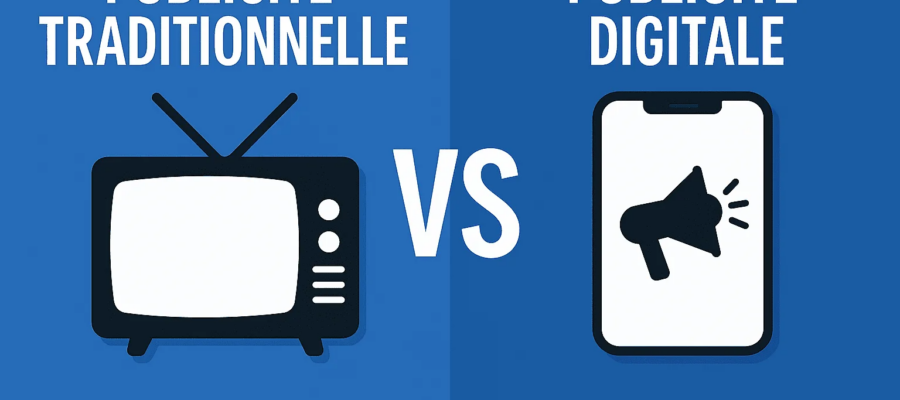
This guide takes stock of the strengths, limitations, innovations and challenges of each approach.
Traditional advertising: strengths, limits and new uses
Faced with digital, are traditional media dead?
Television: still the number 1 media
Despite the surge in digital platforms and streaming, TV remains a widely consumed medium in France. In January 2025, 98.3% of French people watched television at least once a month, or 61.7 million viewers (source).
Big events (Olympics, World Cup, sports finals, prime time) unite up to 10-20 million viewers at the same time.
👉 Why is it powerful?
Television offers immediate and massive exposure that is impossible to identically replicate digitally
When to use it:
For the launch of a product, a national campaign or image communication, TV remains the king platform.
Radio: a medium still widely listened to
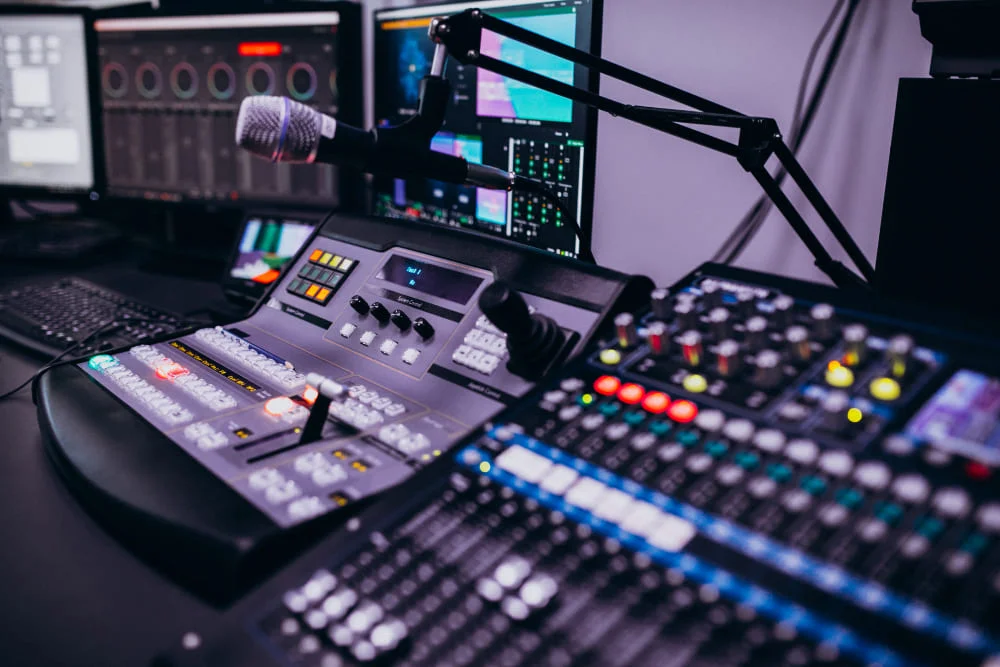
Radio retains a surprisingly strong place in everyday life and unites almost 40 million listeners every day (source). Radio France is the leading radio group with 13.8 million daily listeners.
👉 Why does it still work?
Radio is a daily companion for many people. It can be listened to at different times of the day: car trips, at work, during breaks, during sports, etc.
When to use it:
This is a particularly effective means of anchoring memories and quick commercial offers (“promotional spots”, “flash sales”, etc.).
The written press: fewer volumes, but more credibility
The written press has lost much of its audience over the past decade, but remains a premium media.
The regional daily press (PQR) brings together more than 8 million monthly readers in France (source).
👉 Its main asset?
Credibility.
To store:
An article or advertisement in a recognized newspaper (Le Monde, Les Échos, etc.) influences the perception of a brand much more than a simple sponsored post. Specialized magazines maintain a strong influence in some sectors: luxury, B2B, automotive, health.
Urban billboards: ubiquitous and impossible to ignore
The digital outdoor advertising market, or Digital Out-of-Home (DOOH), is experiencing strong growth of more than 40% in France. There are more than 30,000 digital advertising screens in the country (source: Statista).
Digital screens in stations, subways, airports or shopping centers reach a large and renewed audience.
👉 Why does it remain so effective?
Because we can’t block it, not the “scroll”.
Cinema: a premium media with great attention
It is true that cinema attendance has decreased in 10 years: 205 million admissions in 2015 versus 181 million in 2024 (source). Between streaming platforms, declining purchasing power and unpredictable weather, movie theaters are less attractive.
However, cinema has a strong argument in favor of advertisers: An almost total attention rate. In a dark room there are fewer distractions. The targeting based on the type of film is also interesting.
Traditional media is not disappearing, it is evolving
They are losing ground in terms of targeting and measurement, but remain unbeatable on:
- the power
- memorization
- credibility
- the emotional impact
And in 2025 these media will become digital: segmented TV, IP radio, DOOH, digital printing, etc.
They therefore remain an essential element for brands seeking to reach a large and strong audience.
Digital advertising: precision, data and performance in real time
Digital advertising has fundamentally transformed the way we target, measure and optimize campaigns. In 2026 it is impossible for a brand to do without it.
Digital channels
Digital brings together a set of complementary levers:
- Social networks : Meta (Facebook/Instagram), TikTok, LinkedIn, Pinterest…
Ideal for reaching audiences based on their interests and behaviors. - Search (Google Ads, Bing Ads) :
Target users when they are actively searching for a product → strong purchase intentions. - Display (bannières, retargeting) :
Useful for awareness and remarketing. - Sending email :
ROI often greater than 25:1 according to DMA, if well segmented. - Video (YouTube Ads, TikTok Ads) :
Powerful narrative format, particularly among young people aged 18-34. - Advertising in apps : In-app formats have some of the highest click-through rates.
👉 What makes digital strong: attribution.
Every user action (click, view, add to cart, purchase) can be tracked using tracking, multi-touch attribution and conversion data. This is what allows you to precisely identify what generates results and what doesn’t.
Read also: How to increase your awareness using digital?
The great advantages of digital
Advanced and ultra-precise targeting
In digital we can target based on:
- age, sex, location;
- interests;
- purchasing behaviours;
- the keywords searched for;
- intentions (e.g. “car insurance”, “cheap glasses”, “CRM SaaS”).
Concrete example:
➡️ A Meta Ads campaign aimed only at women aged between 25 and 34 interested in running within a 10km radius around Lyon.
Or Google side:
➡️ A bedding brand targeting the queries “memory mattress reviews” or “best neck pillow”
Performance measured in real time
Unlike television where we wait for Médiamétrie analyses, here everything is instantaneous:
- impressions
- click
- conversions
- acquisition cost
- ROAS/ROI
This allows you to stop an unprofitable campaign in a few hours or amplify a strategy that is working.
Budget flexibility
A Google Ads campaign can start with €10 per day.
On social networks it is possible to take a test for €5 a day.
It is perfect for SMEs and also for large groups who want to quickly test new markets.
The limits of digital in 2026
Online advertising remains extremely effective, but is becoming increasingly expensive and complex.
Cost per click increasing
The average cost per click on Google Ads ads in all sectors is equal to 4.61 euros in 2025, an increase of +12.88% compared to 2024 (source: growth angels).
Competition is increasing and brands are fighting for the same audience.
Ad blocking
In France, 30% of Internet users use an ad blocker (source: backlinko), which reduces the reach of classic display campaigns.
High technical skills
A successful campaign today requires:
- Advanced tracking;
- Writing landing pages;
- Data analysis;
- Creative optimization;
- An understanding of algorithms.
This explains why more and more companies are outsourcing. Faced with this complexity, brands therefore invite digital agencies to:
- manage campaigns;
- create conversion funnels;
- optimize ads and audiences;
- track KPIs and analyze data.
Sortlist is also very useful for many companies that use the platform to find an agency specializing in digital advertising capable of managing Google Ads, Meta Ads, TikTok Ads or multi-channel strategies.
Comparison 2026: traditional advertising vs digital advertising
| Criteria | Traditional advertising | Digital advertising |
| Costs | High (TV, billboards, press). Entrance fee often > €20,000 for a local TV campaign. | Very variable and accessible: from a few euros a day on Google Ads, Meta Ads, TikTok Ads. |
| Targeting | Broad and approximate (estimated age, general geography). | Ultra-precise: interests, behaviors, intentions (search), remarketing, lookalikes. |
| Measurement and data | Limited: audience studies, surveys, extrapolations. | Real time: impressions, clicks, conversions, ROAS, multi-touch attribution. |
| Execution speed | Slow (production + distribution). | Instant: A campaign can be launched in minutes. |
| Budget flexibility | Low: fixed commitments, imposed durations. | Total: Adjustable budgets from day to day or even hour to hour. |
| Emotional impact | Very strong: TV, cinema, premium displays → high storage. | Variable: depends on the format (video, reels, UGC). Fragmented attention. |
| Scope | Mass media: millions of people at the same time. | Also very broad, but it depends on the budget and the auctions. Problem with ad blockers |
| Measurable ROI | Difficult to calculate precisely. | ROI measurable to the nearest cent thanks to tracking. |
| Advertising saturation | Low to medium (depending on media). | High: competition + advertising fatigue + algorithms. |
| Compatibility for small businesses | Often difficult to finance. | Excellent: easy access and immediate start. |
| Long term vision | Ideal for establishing a brand and making an impression. | Ideal for generating leads and measurable sales. |
How to choose the right strategy for 2026?
Faced with the multitude of advertising formats available, there is no single solution. The best strategy always depends on a trio: objective, budget, digital maturity.
Recommendations depending on the objective:
| Marketing objective | Recommended channels | Why these levers? |
| 🎯 Awareness (making the brand known) | – Television advertising – Visualization (OOH / DOOH) – YouTube ads (bumper, TrueView) – Extensive Meta Ads campaigns |
– Very broad coverage – Strong memorization – Immersive formats – Ideal for reaching several million contacts |
| 📝 Generate leads (qualified contacts) | – Google Ads Search – Meta Ads lead forms – LinkedIn Ads (B2B) – Sponsored emails |
– Capture strong intentions (Google) – Built-in forms that convert better – Very precise professional targeting – Ideal for collecting emails/quotes |
| 🛒 Instant conversion/sale | – Google Shopping – Meta ads (retargeting) – TikTok ads (impulse products) |
– Direct presentation of the product + price – Retargeting: Turn hot visitors – TikTok: great for “fun” and viral purchases |
| 🤝 Involvement and loyalty | – Social media (organic + sponsored content) – Email marketing – Interactive content (quizzes, games, immersive experiences) |
– Create a regular connection – Excellent ROI (email) – Loyalty + repurchase – Strengthens the relationship with the community |
Recommendations depending on the size of the company
VSE/independent (limited budget)
➡️ Objective: quick turnaround
Recommended channels:
- Google Ads (Search)
- Meta Ad Conversions
- DOOH local and budget available
- Sending emails/newsletters
Avoid : National TV, huge display.
PMI (average budget)
➡️ Objective: mix of notoriety + acquisition
Recommended strategy:
- Meta Ads + Google Ads (retargeting action)
- Targeted DOOH (shopping malls, regional stations)
- Local radio
- SEO + sponsored content
Big companies
➡️ Objective: huge impact + omnichannel
Ideal strategy:
- National (or segmented) TV.
- Display (premium OOH/DOOH)
- YouTube Ads
- Cross-platform social ads
- Large Google campaigns + branding
Latest posts
Traditional vs digital advertising in 2026: which one to choose?

Duplicate Content: A Problem for Your Natural Referencing?
SEO Forums: The Complete List [2026]
How to build a successful linking strategy?

5 tips for successful marketing based on storytelling
Instagram profile photo: the practical guide [+Outils]
Twitter: 7 strategies to stand out
How to increase your awareness using digital?
Why premium domains improve your customer acquisition cost (CAC)