
Digital pollution in brief
Digital pollution includes all environmental effects caused by the IT industry. In an age where technology is omnipresent, the problem is increasingly important.
In France alone, at least 10% of electricity consumption per year comes from digital services and 2.5% of the country’s carbon footprint is digital-related. (Source).
Discover all the main numbers and statistics on digital pollution.

These statistics particularly confirm the urgency of policies aimed at extending the useful life of digital equipment through approaches such as product durability, reuse and refurbishment.
What are the causes of digital pollution?
Most of the digital pollution is due to this equipment manufacturing process and not its use.
In fact, the production of devices generates 47% of greenhouse gases.
Data centers also have a significant impact on the environment2% of greenhouse gases come from the cooling system used to operate the countless amounts of data stored there. These data centers, in fact, work constantly and create a lot of heat, air conditioning (which represents 30 to 40% of total electricity consumption) is therefore present to avoid problems related to overheating (breakdowns, fires).
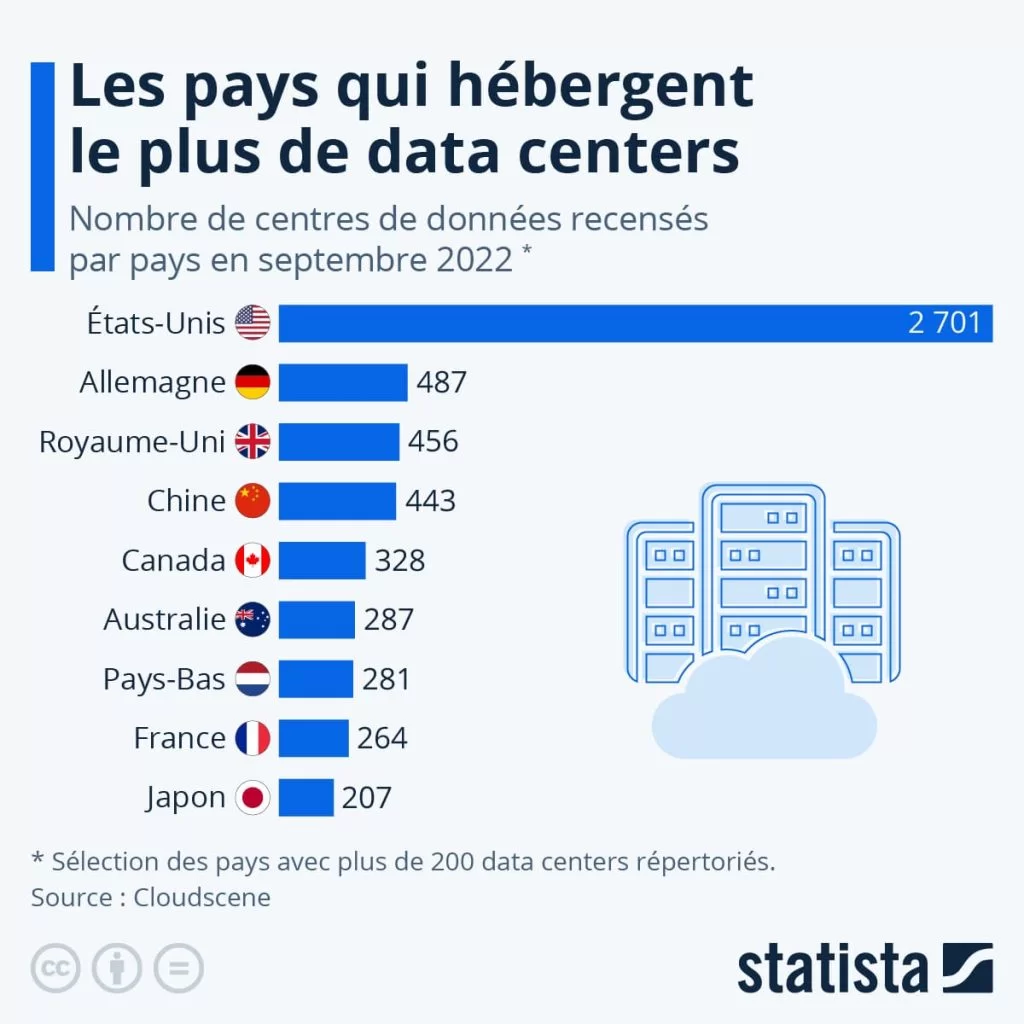
There are more than 2,700 data centers in the United States alone:
Finally, the latest source of digital pollution is associated actions and behaviors of online users (email, video, 4G, video, etc.) generate a large amount of CO2. Sending an email is equivalent to 0.3g of CO2. It may not seem like much, except when you know that an employee receives an astronomical number of emails per day.
According to the Sud-Ouest newspaper, on average an employee processes around 144 emails a day, a manager around 200 and a company executive receives at least 400 a day.
When it comes to CO2, we leave the math up to you!
However, these tools are now essential in the world of work. Some, such as video conferences, have become essential for the practice of some professions. In particular, on Green Opinion you can find advice for choosing the right communication while limiting its environmental impact.
What impact on the environment?

Data centers and infrastructure contribute to global warmingbecause they require electricity based mainly on fossil fuels, carbon dioxide (CO2) and methane (CH4°). The consequences linked to global warming arise from these resources (increase in temperature, variations in meteorological phenomena, etc.).
The production of electronic devices (smartphones, tablets, computers, etc.) requires rare and precious materials, which contributes to the depletion of natural resources. During the manufacturing process, toxic chemicals are released that cause contamination of air and water.
Finally, electronic waste which are made up of heavy metals and plastic can cause serious health problems and a harmful impact on the environment. Therefore, the rapid growth of new technologies generates a sharp increase in electronic waste.
However, Europe has the highest collection and recycling rate. In 2019 it comprised (collection and recycling rate) approximately 42.5% of all electronic waste produced.
What solutions to reduce the impact on the environment?
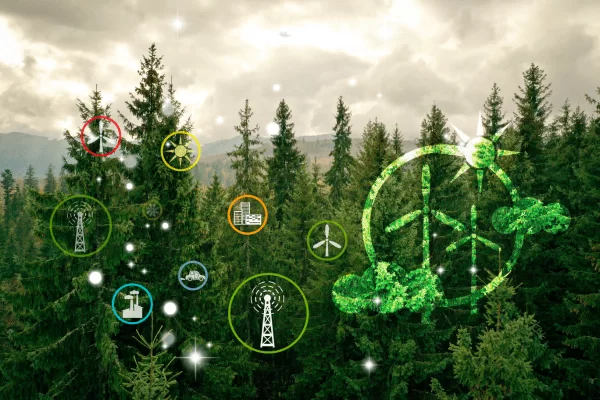
Adopt eco-responsible design practices it is a good way to reduce the percentage of greenhouse gases. The devices have a longer lifespan, meet user needs, adapt to developments and offer a lot of accessibility while consuming less.
We also recommend that resort to renewable energy resourcesin particular solar and wind energy, to power data centers in order to reduce the environmental impact linked to carbon emissions.
Prefer short emails without attachments and sorting your emails regularly helps reduce your environmental impact. Buy refurbished electronic devices it also reduces the impact of pollution unlike manufacturing.
THE’adoption of environmental standards and regulations encourages sustainable device design and responsible management of electronic products. The AGEC law (The anti-waste and circular economy law) of 10 February 2020 concerns the obligation for suppliers to provide their customers with information on consumption data and to provide an estimate of the corresponding greenhouse gas emissions.
Finally, the awareness to inform on the impacts of digital pollution and promoting responsible digital behavior remains an important approach that can be applied within a CSR policy. Through this framework, companies implement various actions so that stakeholders can effectively contribute to preserving the environment.
Latest posts

Traditional vs digital advertising in 2026: which one to choose?

Duplicate Content: A Problem for Your Natural Referencing?

SEO Forums: The Complete List [2026]

How to build a successful linking strategy?

5 tips for successful marketing based on storytelling

Instagram profile photo: the practical guide [+Outils]

Twitter: 7 strategies to stand out

How to increase your awareness using digital?

Why premium domains improve your customer acquisition cost (CAC)